Khoury News
100+ university partners, $30 million, one key idea: Make computing education welcoming for everyone
Backed by lessons learned at Khoury College, Northeastern's Center for Inclusive Computing is helping CS colleges nationwide to diversify their degree offerings, integrate with other fields, and enable true beginners to thrive.
Computer science is evolving rapidly, and computer science education is, too. Programs that develop computer-loving kids into single-discipline experts are waning in popularity. And while building what comes next may be complicated, it certainly isn’t a mystery.
By tackling the structural problems that stymie CS beginners, the Center for Inclusive Computing (CIC) is helping colleges of computer science across the US build the interdisciplinary programs students need to succeed.
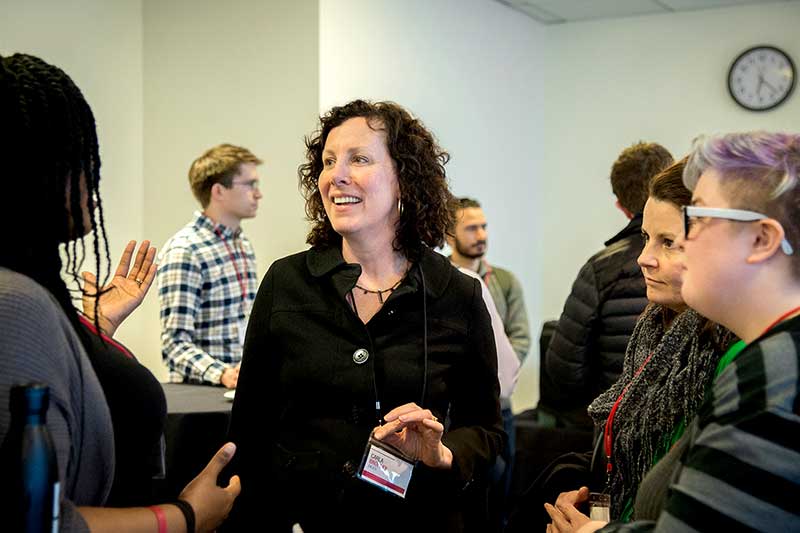
One major key: create welcoming ways for students who didn’t encounter computer science in high school to make their way into the discipline, said CIC founding executive director Carla Brodley. When she joined Northeastern in 2014 as dean of Khoury College, she was fascinated to see the university’s female students — who were statistically less likely to have taken computer science in high school — more prevalent in the combined CS and design major than in any other CS program.
Over the next decade, Brodley’s observation only became more salient. As Khoury College expanded its combined computer science and data science major options from 12 to almost 60, the percentage of Northeastern’s female students pursuing computer science soared to almost double the national average.
“When you come to university to study something else, and you find that you might be able to combine it with computer science and AI — if the invitation feels open to people who are new to coding and computer science, you might try it,” Brodley said. “But nothing we do is specific to any demographic group; we made the intro sequence one in which true beginners can thrive.”
Since its founding in 2019, the CIC has worked with leaders at over 100 universities across the US to apply lessons learned and improve access to computer science education. It has distributed more than $30 million in grant funding, largely from private sources, to make systemic, sustainable changes to institutions’ computing programs, and has paired it with computing education expertise, mentorship, community, and its own research-based insights.
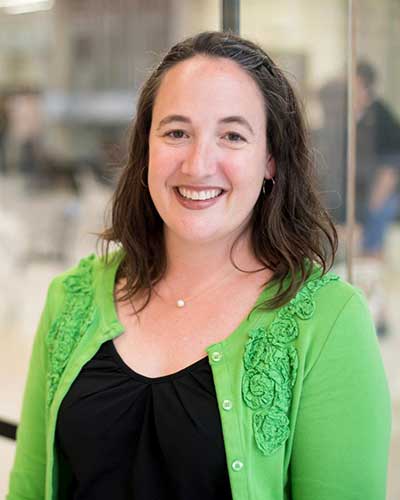
“The Center for Inclusive Computing is a very involved organization,” said Alison Norman, the Associate Chair for Undergraduate Education at the University of Texas at Austin. She first worked with the CIC to develop an accelerated pathway for students to transfer into CS, and then again to create interdisciplinary computing majors with history, linguistics, and neuroscience.
“We might have been slower to adopt combined majors alone, but Carla came here, talked to people, and got everybody excited,” Norman said. “It really smoothed the pathway.”
In Texas, where only half of high schools meet the state requirement to offer computer science classes and many students graduate with no exposure to CS education, a pathway for true beginners is crucial.
“We found these initiatives were designed to impact students who were more unsure of their computing skills, to help them have a level playing field when they came in,” Norman said. “Here in Texas, we have some high schools that have six computer science courses and some that have none; we were able to impact people who were less likely to be encouraged earlier on.”
It’s also important, both to public universities like UT Austin and to the CIC itself, that systemic changes don’t come with ongoing costs. For example, scholarships can encourage students to study CS, but they require steady funding. On the other hand, at some universities — including, historically, UT Austin — only students who apply as CS majors can major in CS, and working with the CIC to build accelerated transfer pathways from other STEM majors didn’t require ongoing cash. The fact that a CIC grant funded UT Austin to gather data on the impacts of the changes was the cherry on top.
“We have had some really stellar people come through these programs that we would not have had before, and they have thrived,” Norman said. “That’s the biggest thing about systemic initiatives; you can’t look at somebody and tell where they’re going to struggle. As you find something that helps some students and offer it to everybody, the rising tide floats all boats.”

For Sudeep Sarkar, launch dean of the new Bellini College of AI, Cybersecurity, and Computing at the University of South Florida (USF), broadening participation in computing isn’t about who’s coming in as much as it’s about the world into which those students will graduate. Sarkar’s years-long collaboration with the CIC on master’s pathways and interdisciplinary computing majors have helped inform the new college’s role in the wider USF community.
“AI is reshaping every discipline, not just ours.” Sarkar said. “A college of business owns business; a college of engineering owns engineering. But the Bellini College has a different charge. We can’t be a silo. Every student at USF, whatever they’re studying, needs to understand these tools and methods to succeed in their field. That’s what makes this college genuinely different.”
The road to ubiquitous participation is paved with good curricular design choices, and USF’s are informed by the CIC’s extensive research into impactful undergraduate interventions. USF has had particular success standardizing introductory CS courses and evaluations.
“‘That section is easier.’ ‘We have more assignments in this section.’ I used to get those complaints as the chair,” Sarkar said. “Those are now gone; everybody is measured on the same playing field. The students are appreciative, and we have students who would have probably dropped off who are now staying on.”
As with many of the CIC’s interventions, students who otherwise would have struggled aren’t the only ones benefitting from the change.
“It’s great if you have a uniform assessment, so the next professor in the course progression doesn’t have a non-uniform distribution of how well people have understood the material in the class before,” Brodley said. “Everything that we’re doing is helping everybody … and we’re starting to see schools making these changes without our funding.”
For Sarkar and Norman, there’s no mystery about why other colleges would want to implement the CIC’s insights.
“As we do this, the general culture shifts; the students trust that the department is trying to help them succeed,” Norman said. “The biggest thing is believing that the change can be made. It’s sometimes hard to see how you’re going to get to that point, but the community, the wisdom, and the mentoring exists. The CIC will help you figure out what needs to be done.”
“There’s a cultural change that has already happened,” Sarkar agreed. “That’s a good thing; that means that we’ve institutionalized some of these practices. I’m glad the CIC is playing this leadership role.”
The Khoury Network: Be in the know
Subscribe now to our monthly newsletter for the latest stories and achievements of our students and faculty