Khoury News
Northeastern–Stanford collaboration could redefine how helicopters and ships save lives at sea
For those tasked with medical evacuations, an injury on an island or at sea can be a logistical nightmare. That's why a trio of researchers are creating an advanced AI mechanism to sync up all the motorized moving parts.

When a patient is injured on an island hundreds of miles from the nearest hospital, time is everything. Helicopters can fly fast but have a limited range; ships can travel far but move much more slowly. Linking the two efficiencies, in real time and under pressure, has long been a logistical nightmare for militaries and disaster responders alike.
That’s the challenge undertaken by Stanford researchers Mahdi Al-Husseini and Mykel J. Kochenderfer, along with Khoury College Assistant Professor Kyle Wray. Their recent paper, “Semi-Markovian planning to coordinate aerial and maritime medical evacuation platforms,” proposes a way to use artificial intelligence to coordinate helicopters and ships as a single, adaptive evacuation network.
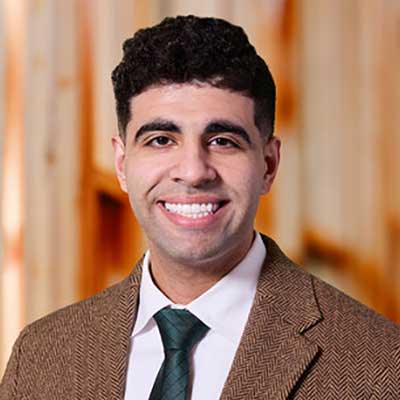
“As an active-duty medical evacuation Black Hawk helicopter pilot, I saw a lot of inefficiencies in the way we move patients in areas where distances are vast and coordination is complex,” said Al-Husseini, who has planned medical evacuations as an aeromedical officer in the US Army. “Our goal was to develop optimal decision-making systems for dispatching medical evacuation aircraft in these challenging environments.”
“Essentially, there’s a medevac challenge,” Wray added. “It can be applied broadly beyond just troops for deployment — it can also be for general use in a natural disaster or other things. In an island scenario, you have several helicopters, several boats, and people who need to be medically evacuated. To get them treatment as quickly as possible, you need to make efficient use of your resources.”
Medical evacuation, or medevac, has always been a race against time, but at sea, the problem becomes even harder. Hospitals may be hundreds of miles apart. Helicopters can’t always make the full journey before refueling. In the middle of the ocean, there are no fixed points to transfer patients. Ships move along their own routes, while helicopters launch from different locations. Each minute spent coordinating adds to a delay, but poor planning risks leaving patients stranded or aircraft unavailable for the next emergency.
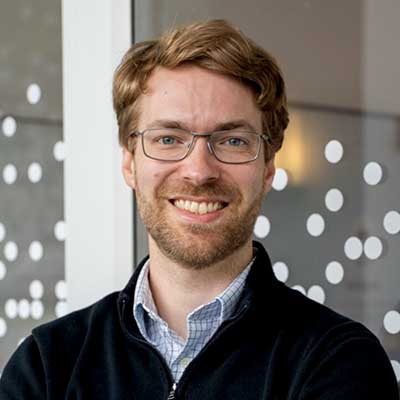
“Decision-making can be very challenging, especially when there’s partial observability. You may not know exactly what the environment looks like or where every unit is,” Al-Husseini said. “Our system is designed to make those dispatch decisions in real time, even when communication or information is degraded.”
It’s a juggling act of risk, distance, and readiness. Each helicopter consumes fuel and flight hours that limit future missions. Ships can help bridge the gap by acting as “exchange points” where one aircraft drops off a patient, and another aircraft picks them up — but only if their timing aligns precisely.
To make sense of these moving parts, the researchers built a semi-Markov decision process — a mathematical model that can handle actions taking variable amounts of time. Each “state” in the model represents where every helicopter and ship is, which patients are waiting, and how close each aircraft is to needing maintenance or refueling.
Possible “actions” include sending a helicopter directly to a hospital, dispatching it to meet a ship at sea, or staging it on another island. The model then predicts how long each option will take and how it will affect future readiness.

Crucially, the model doesn’t assume ships or aircraft are stationary. It tracks them as they move through the ocean, creating a constantly shifting chessboard.
To weigh competing priorities — patient survival, response time, and fleet sustainability — the researchers defined a reward function that blends medical urgency with logistical pressure. The longer a patient waits, the lower the reward. But overusing an aircraft also carries a penalty in the form of fatigue, maintenance, or future mission risk.
Once the system could simulate the outcome, the next challenge was deciding what to do. For that, the team used a variance of Monte Carlo tree search — an algorithm that runs thousands of simulated futures, tries different dispatch choices, and learns which combinations produce the best overall results. It is from the same family of algorithms that helped computers master complex games such as chess.
“The algorithms allowed us to see tangible gains in the scenarios that are hardest for real-world operators,” Al-Husseini said.
The team tested three strategies: an optimized AI policy that considers both land and ship exchange points, a land-only model that ignores moving ships, and a greedy model that picks the nearest option every time.
They simulated operations between Oahu and Kauai using real Army aircraft and ship specifications. The results were impressive: the AI-optimized approach with ship exchanges improved overall response performance by 35% compared to the land-only plan, and 40% compared to the greedy method. The gains were greatest when helicopters were slower, or casualty loads were high — exactly the situations where real operations struggle most.
The real test came with a live simulation in October 2023. Partnering with the US Army’s 25th Aviation Brigade, the team successfully planned and executed a live demonstration. One Black Hawk helicopter picked up a model patient from shore, flew out to meet a moving logistics support vessel south of Honolulu, and dropped off the stretcher. Minutes later, a second helicopter rendezvoused with the ship to complete the transfer to Tripler Army Medical Center.


“That live exercise was the culmination of years of collaboration between Stanford, Northeastern, and the Army,” said Al-Husseini, who was stationed in Hawaii at the time. “We used our decision-making system to inform how the mission should unfold, and to respond when the ships weren’t exactly where we thought they would be … Seeing it play out in the field validated that the system isn’t just theoretically optimal — it’s operationally useful.”
“We had been working previously on wildfire fighting,” Wray said. “This work is a natural extension of several of the ideas for how you fight wildfires. It’s coordinating multiple intelligent agents — whether helicopters or drones or boats — to work together to resolve the situation.”
The implications of their research go well beyond the military. In disaster zones, remote island chains, or large-scale humanitarian crises, similar hybrid systems could help coordinate helicopters, drones, and ships for faster rescues.
“There are really two categories of next steps,” Wray added. “On one hand, we’re exploring more of the theoretical foundations — identifying structures and patterns that are common across these kinds of coordination problems. On the other hand, we’re looking at applications — everything from search and rescue to warehouse fulfillment. Coordinating multiple agents efficiently has huge potential across domains.”
It’s also an example of how AI can augment human decision-making rather than replace it. The algorithm doesn’t give orders; it offers recommendations that commanders can accept or override. That combination of machine foresight and human judgment could make emergency logistics faster and safer.
“There’s a saying — a problem well-stated is a problem half-solved,” Wray said. “Framing the problem with a strong theoretical foundation gives you the ability to enter new domains and solve them efficiently. That’s what made this project so exciting; it shows the strength of uniting theory and practice.”
As for Al-Husseini and Wray, their collaboration is far from over.
“I really appreciated Mahdi’s incredible work,” Wray added. “He’s an incredible engineer and student and thank you to him for his service. The collaboration with Stanford has been fantastic and I look forward to continuing our work together.”
“It’s exciting research,” Al-Husseini added. “The system doesn’t remove people from the loop — it gives them a better understanding of what is possible now. That partnership between human experience and algorithmic reasoning is what makes it powerful.”
The Khoury Network: Be in the know
Subscribe now to our monthly newsletter for the latest stories and achievements of our students and faculty