Khoury News
Beyond the classroom: How Miami master’s students upgraded a student mental health platform
The Vibes platform was designed to help overstretched counselors look after their students. As part of a professional practicum course, Khoury students worked to make Vibes more engaging for students and more helpful to counselors.
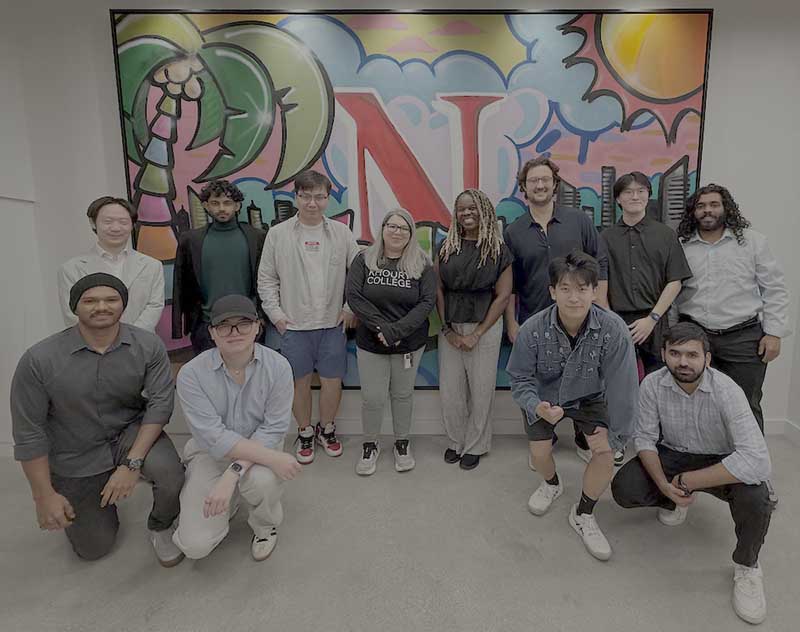
Emotional wellness starts at a young age, and thanks to Khoury students at Northeastern Miami, an app designed to help counselors track students’ emotional states will become even more effective.
As part of their elective Professional Practicum course — a high-level, challenging industry experience under the mentorship and guidance of Khoury faculty — computer science master’s students worked with student-centered design and tech company KidzHack on their Vibes platform in partnership with Miami-area schools. The practicum embodies Northeastern’s commitment to experiential learning and industry engagement.
Vibes’ student users, ranging from fourth to eighth grade, journal about their lives and input where they feel they are on an emotion wheel. Some schools incorporate it as a part of their daily curriculum; the data is then reported back to counselors, and concerning journal entries or emotions trigger alerts that allow counselors to check in with students before a crisis occurs.
The Khoury students were mentored along the way by Gabriela Gongora-Svartzman, associate teaching professor and director of computing programs for Northeastern Miami.
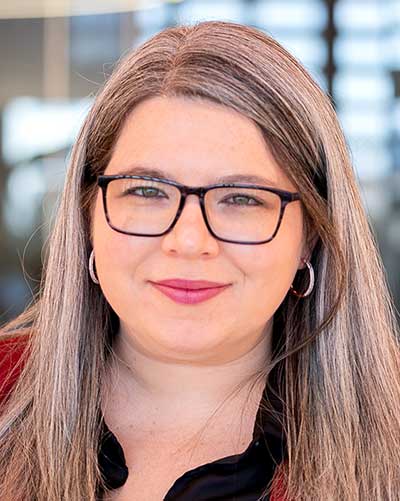
“Across the country, there is disparity in counselor–student ratios,” Gongora-Svartzman said. “Some schools have one counselor for 700 students. No way a single counselor can keep up with those numbers. With Vibes, students don’t fall through the cracks.”
Khoury students split into two teams. The first focused on student engagement and platform experience improvements. They implemented activities, milestone tracking, and engagement incentives to encourage students’ continued participation throughout the school year.
The second team designed and developed an AI-powered alert pipeline that evaluates students’ emotions and journal entries, identifies escalating student distress patterns, and alerts counselors accordingly. They also introduced text-quality filtering and Gen Z/Gen Alpha slang interpretation capabilities to detect students’ nuanced emotional expression and coded language.
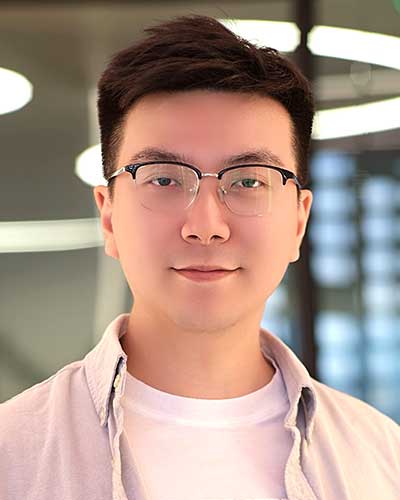
“Our team made improvements to the app with AI and developed alert tiers, which are more helpful for teachers and counselors,” said computer science master’s student Erdun E. “There’s a challenge of not understanding Gen Z language and slang, but now the AI understands that some combinations of emojis have meaning.”
“A lot of kids aren’t able to articulate their emotions or express themselves if there’s something wrong at home,” added computer science master’s student Raj Kavathekar. “It’s often coded. Vibes can show hints of problems at home.”
Both teams tested and deployed their solutions to production; students, counselors, and educators from K-12 across Miami are currently using them.
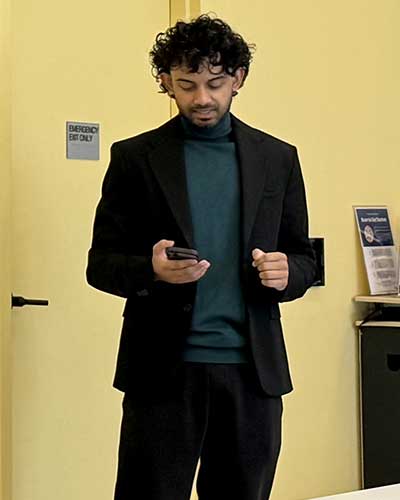
“I have previous experience with games and other software, but this was the first time I had to worry about students’ mental health and safety,” Kavathekar continued. “I had to double check everything.”
Beyond the technical deliverables, teams gained experience working and communicating with a real client, operating within production constraints, communicating professionally, and building systems intended to support meaningful social impact in their local community.
To Align computer science master’s student Julian Mahe de Berdouare, the app offers an opportunity to make a meaningful difference to children’s lives.
“A lot of the failure points of counselors in modern public school systems have to do with over-congestion of the people that each one is responsible for,” he said. “This is a baseline system that can qualify the kids who are struggling so that counselors know who to reach out to.”
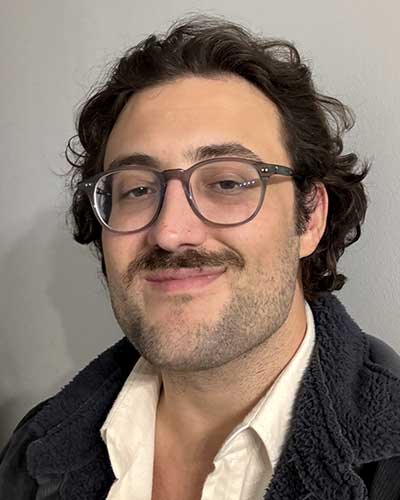
As an Align student with a pre-law background, Mahe de Berdouare had never experienced a real-world developer environment before.
“Being able to dip your toes into a real production environment in a school-sanctioned safe space — and having peers look at what you do — was very valuable for my comfort and confidence in finding jobs,” he said. “My team was phenomenal, extremely professional. I don’t see how regular classes could offer what the practicum did.”
Gongora-Svartzman helped provide that space for learning and development. As the practicum’s faculty lead, she helped manage the scope of the project and the communication between KidzHack and Khoury students, advising students weekly on best practices, milestones, and client engagement.
“This learning is important for CS students in bridging the gap between a class and a real-world environment,” she said. “Align students might have a lot of professional experience, but in areas other than tech. Direct-entry master’s students might be limited in their tech exposure in the US market.”
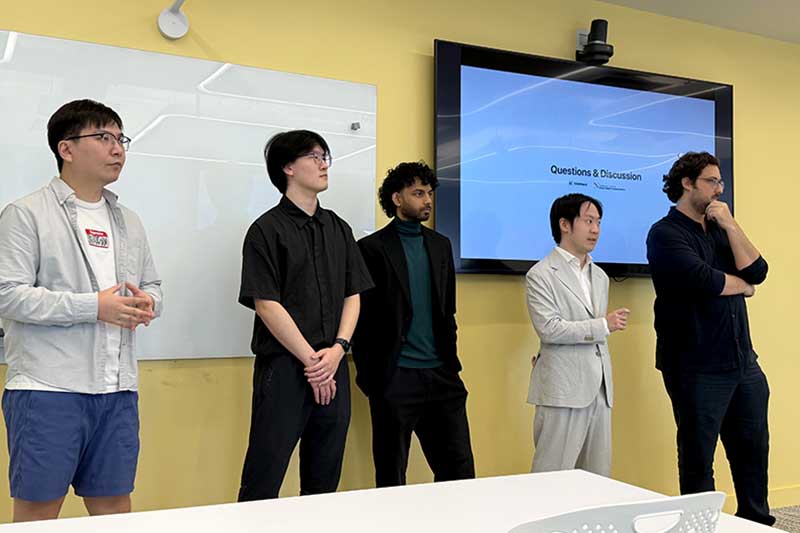
Gongora-Svartzman’s responsibilities also included finding the client initially and developing a statement of work that outlined responsibilities, points of contact, and the project’s scope. She met the founder of KidzHack, Wanda Eugene, at the Tapia Conference for Diversity in Computing, where Gongora-Svartzman spoke on a panel about rethinking learning with generative AI. KidzHack had partnered with undergraduate programs at other universities before, but never with master’s students, and both Eugene and Gongora-Svartzman acknowledged the value of developing a deep CS culture in Miami with a social impact lens.
“Our students needed to be very conscious of how they built their projects. If we made mistakes, we were affecting lives,” Gongora-Svartzman said. “The client was thankful for how thorough our students were with testing the app and leaving documentation.”
As the first Miami Khoury practicum, the KidzHack collaboration set the stage for future Miami practicums and opportunities to work with organizations solving challenges in South Florida. An upcoming practicum will involve both the Miami and Arlington campuses, which will expose Khoury master’s students to problems in other communities as well as ways to learn from each other.
“You don’t get soft skills unless you practice them,” Gongora-Svartzman said. “I can’t teach these skills with theory. The fact that we are also contributing to communities in need of our CS skills is a dream come true.”
The Khoury Network: Be in the know
Subscribe now to our monthly newsletter for the latest stories and achievements of our students and faculty