Khoury News
From incarcerated to employed: Designing and teaching AI for dignified workforce re-entry
Saiph Savage has built her research career around uplifting workers through tech. Her latest project, which she presented at the Vatican in the fall, strives to prepare incarcerated people to re-enter a tech-driven workforce.
When Jesse Nava got his first laptop, he didn’t touch it for a year.
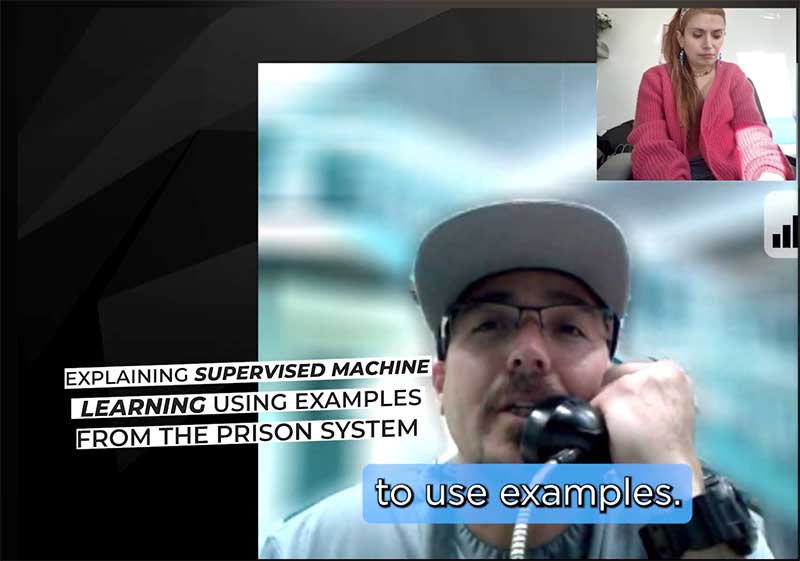
“I felt intimidated by that machine,” Nava said. “For two or three semesters, my laptop sat on my bunk, and I said, ‘I’ll just stick to pencil and paper.’ It seemed easier than trying to navigate even logging into a laptop.”
Nava — who is located in California — is one of more than 770,000 people in the United States serving prison sentences of 10 years or longer. Technology is unrecognizable compared with what it was when Nava was first incarcerated more than two decades ago, and he is determined that he and his peers leave prison with the digital skills they need to succeed.
That lived expertise is exactly why Saiph Savage, an assistant professor at Khoury College and director of the Civic AI Lab, invited Nava to co-design the High-Tech Career Reentry Path Project.
“My research lab focuses on creating AI systems that are not replacing workers, but rather giving them human dignity. For example, these individuals who have been removed from society — how do we give them an opportunity to find jobs they find fulfilling?” said Savage, whose previous work has included research tools to measure unpaid crowdsourced labor and intelligent interfaces to help government social workers better serve victims of domestic violence. “It’s all about redefining the future of AI so that it’s not marginalizing people more, but rather creating dignified experiences for humans.”
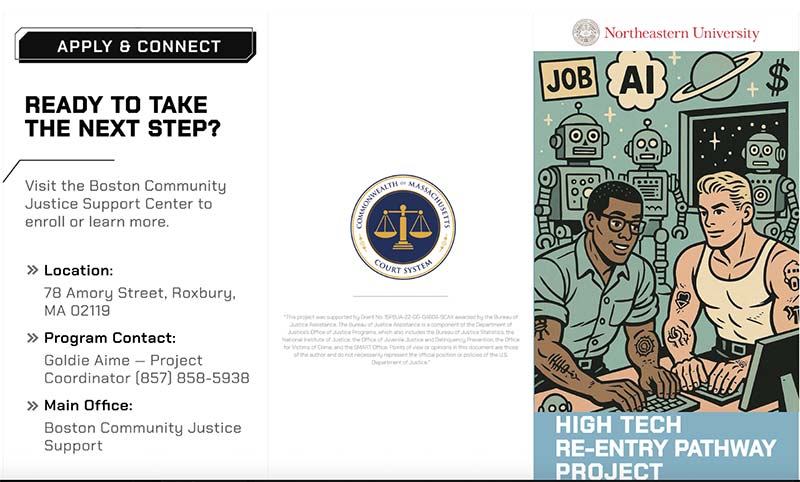
Under Savage’s leadership, and in collaboration with incarcerated project leaders like Nava, the High-Tech Career Reentry Path Project equips incarcerated and formerly incarcerated people with core digital skills like how to operate a laptop or apply for jobs online, as well as an understanding of how AI can support their return to the workforce. Participants also learn to use generative AI to carry out tasks like data mining and data visualization, and to support prediction and decision-making. These AI-enhanced digital skills let participants search for online tech jobs, while Northeastern-issued digital badges help demonstrate those skills to potential employers.
“After being incarcerated for so long, getting out into society and not understanding technology is very intimidating,” Nava said. “We’re trying to bridge that gap, to make people more marketable in a society that has moved forward in giant leaps since they’ve been incarcerated.”
Supported by a grant from the Department of Justice, the project serves currently incarcerated people who are preparing to return to society across Massachusetts, especially those planning to live in Boston. After release, participants continue working with Savage through the Community Justice Support Center in Roxbury, where she and her team collaborate with Vincent Lorenti, director of the Massachusetts probation service, and Goldie Aime, project coordinator of the High-Tech Career Reentry Path Project.
Savage’s work is not the first effort to teach tech skills in prison, but earlier programs often failed because incarcerated people were not involved in creating them. By contrast, Savage’s research often combines participatory design with human-centered AI. It’s her relationships with member–researchers like Nava that provide methods and structure to her goal of redirecting the benefits of technology away from powerful institutions and toward underserved communities.
“Creating human-centered AI research takes a lot of time, and it’s important for Khoury students interested in human-centered AI to recognize that we need to include everyone in the design,” Savage said.

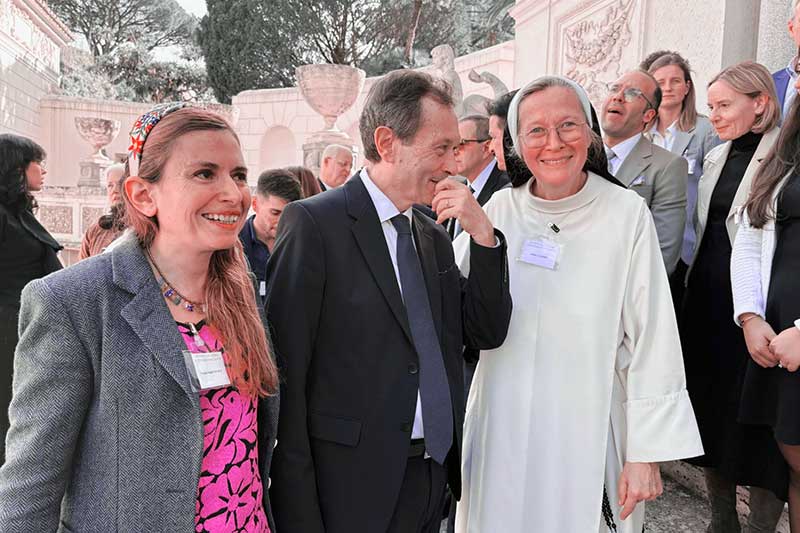
In mid-October, Savage presented the pilot program at Digital Rerum Novarum, the Vatican’s two-day seminar on AI for peace, social justice, and human development. Inspired by Pope Leo XIII’s 1891 Rerum Novarum on workers’ rights during the Industrial Revolution, the interfaith event brought together global experts and faith leaders.
“We all came together to have deep conversations about what the future of AI should look like to ensure dignified futures for people,” Savage said. “Big tech doesn’t make enough profit if they’re designing tools for prisoners, so they don’t necessarily have to care about that population. But the church — thinking about us as humans and about creating dignified experiences for people — has the opportunity to care about what that technology should look like.”
The conversations will continue through the Global AI for Good Network, led by Argentine global governance expert Gustavo Beliz, which Savage encourages Northeastern scholars interested in AI and justice to join. She is excited to continue building AI for good, especially with workers who have historically been excluded from conversations on how AI systems should look.
And for people in the Massachusetts Department of Corrections interested in tech, Nava strongly encourages taking part in the High-Tech Career Reentry Path Project.
“This program means getting out of prison and not feeling like I lost 25 years, because I’m finally up to par in technical literacy,” Nava said. “We want participants who take responsibility and are ready to change — and we deeply value people like Dr. Savage who believe in our journey of redemption and growth.”