Khoury News
Khoury PhD students, postdocs make the jump to professor in 2026
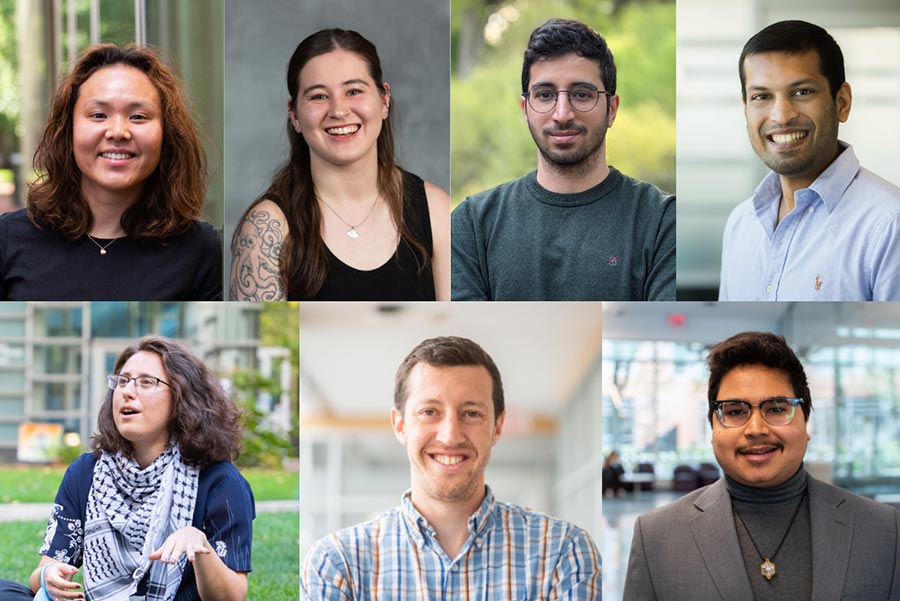
For years, these seven researchers have researched and developed their computing passions at Khoury College. Now, as the fall term arrives, they're ready to begin faculty roles across three different continents.
Kutub Gandhi
- Khoury affiliation: PhD student
- Khoury advisor: Seth Cooper
- New position: assistant professor, University of Tampa
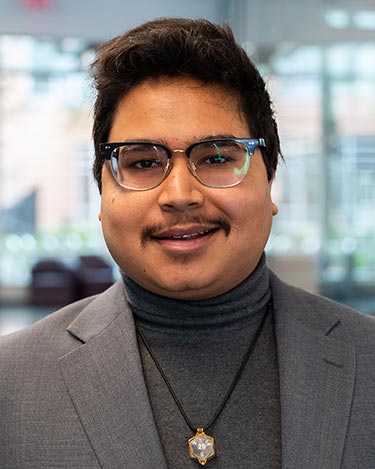
Kutub Gandhi researches educational games, with a focus on social and ethical topics that invite players to think critically about themselves and the world around them. As part of his thesis, he designed a game that dealt with wealth inequality, then ran an online study showing that the game shifted players’ attitudes in favor of action for wealth equality — regardless of their existing political beliefs.
At the University of Tampa, Gandhi will teach general computer science and help to start a game design minor. He plans to continue researching education via modern technologies and building connections with the education industry.
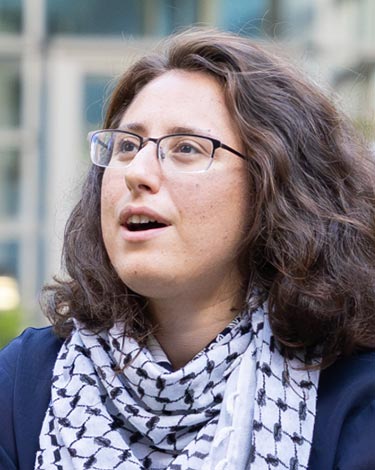
Leah Namisa Rosenbloom
- Khoury affiliation: postdoc
- Khoury advisor: Michael Ann Devito and Ada Lerner
- New position: assistant professor, Rhode Island College
Leah Namisa Rosenbloom is not your typical cryptography researcher. With a background in grassroots organizing, they aim to dismantle harmful technologies, replace them with tech that sustains human lives, and empower activists and organizers to fight for change without forfeiting their privacy and security.
READ: Research that hits home: Leah Rosenbloom fights to balance privacy and activism online
“Conversations with people, doing collective privacy workshops and trainings — those activities are a big driving force behind why I do research and where I get my ideas and questions,” Rosenbloom told Khoury News in 2025. “My objective is to get information into the hands of the people who can most benefit from it.”
After a postdoctoral stint in Northeastern’s Sociotechnical Equity and Agency Lab, Rosenbloom will now return to Providence, R.I. — where they earned their master’s and PhD — to teach at Rhode Island College.
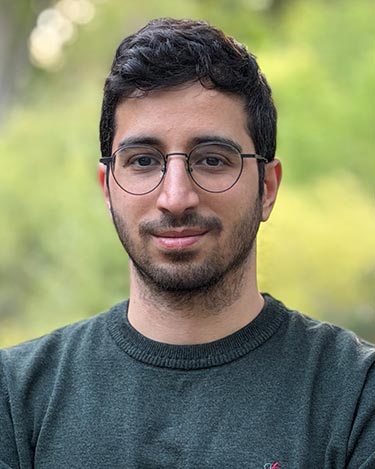
Jad Silbak
- Khoury affiliation: postdoc
- Khoury advisor: Daniel Wichs
- New position: POSITION, Technion – Israel Institute of Technology
Jad Silbak has studied and researched far and wide, from the Israeli tech hubs of Tel-Aviv and Haifa to postdoctoral fellowships at UC Berkeley, Northeastern University, and MIT. Now he returns to Haifa for a new post at the Technion – Israel Institute of Technology.
Silbak’s research — chiefly in cryptography, differential privacy, complexity theory, and derandomization — examines how computational restrictions on adversaries enable constructions that are impossible in the information-theoretic setting.
In coding theory, Silbak built error-correcting codes that boasted improved rates and efficiency against adversarial channels with limited computational power. These ideas, based on new notions of computational hardness, have enabled new applications in cryptography and complexity.
In differential privacy, Silbak works to characterize which cryptographic assumptions are needed to perform differentially private computations with non-trivial accuracy.
Vikrant Singhal
- Khoury affiliation: PhD student
- Khoury advisor: Jon Ullman
- New position: assistant professor, University of Copenhagen
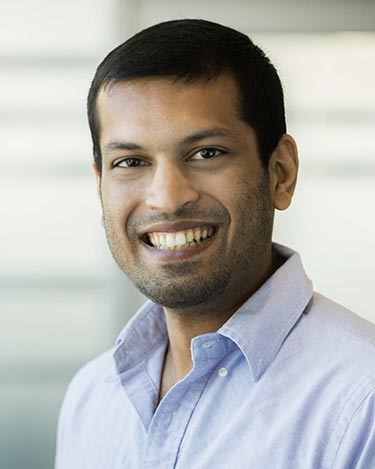
Vikrant Singhal’s computing journey has taken a winding, far-reaching path — Los Angeles for his bachelor’s; Boston for his master’s and PhD; Waterloo, Ontario for his postdoctoral studies; and finally Cambridge, Mass. for a research associate position with OpenDP, Harvard’s privacy tools project. Now he’s moving to the University of Copenhagen, where he will research in the Foundations of Responsible Machine Learning group.
Along the way, Singhal has built a broad research profile that includes computing theory and algorithms, and which has focused more recently on the nexus of differential privacy, statistics, and machine learning.
Alyssa Smith
- Khoury affiliation: PhD student
- Khoury advisor: David Lazer, Brook Foucault Welles
- New position: assistant professor, College of the Holy Cross
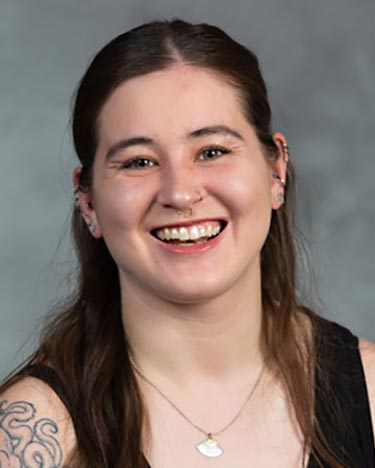
For Alyssa Smith, the social and the technical are inseparable.
Throughout her PhD, which was supported by an NSF Graduate Research Fellowship, she investigated the ways in which humans impact — and are impacted by — sociotechnical systems. In particular, she studies civic discourses, attention dynamics, and information spread, asking how they influence power. By including qualitative methods like semi-structured interviews and autoethnography alongside computational social science methods, Smith strives to better understand the nuances and contexts of these phenomena. She also built open-source teaching materials, datasets, and tools, and ran an interdisciplinary mentorship group at Northeastern’s Network Science Institute.
At the College of the Holy Cross in Worcester, Mass., Smith will teach courses in the statistics and data science programs, beginning with “Intro to Programming in Python.”
Ben Weintraub
- Khoury affiliation: PhD student, postdoc
- Khoury advisor: Cristina Nita-Rotaru, David Choffnes
- New position: assistant research professor, University of Notre Dame
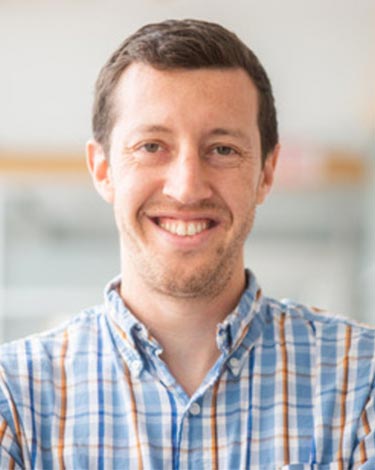
Ben Weintraub completed both his PhD and his postdoc at Northeastern, the former under Cristina Nita-Rotaru and the latter under David Choffnes at the Cybersecurity and Privacy Institute. Throughout, he employed empirical and formal methods to close the gap between theory and implementation of network protocols, including by shedding light on what makes these protocols vulnerable and quantifying exactly how vulnerable they are. In his thesis, Weintraub modeled and measured scams and attacks on blockchain protocols, and has since extended this thrust into additional domains including interdomain routing, network policies, and anonymity systems.
READ: Three papers by Khoury PhD student accepted at prestigious security conference
Weintraub will continue his research with the Lucy Family Institute for Data and Society at the University of Notre Dame in South Bend, Ind., where he will also teach cybersecurity.
Hye Sun Yun
- Khoury affiliation: PhD student
- Khoury advisor: Tim Bickmore, Byron Wallace
- New position: assistant professor, Lafayette College
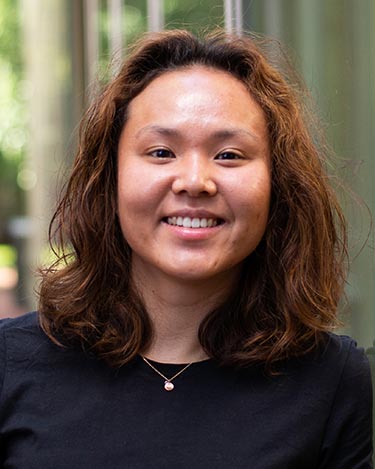
At Khoury College, Yun researched at the intersection of human–computer interaction, natural language processing, human-centered AI, and health care, with the aim of creating language technologies that help people access and understand health and medical research.
READ: As AI expands into medicine, Northeastern study finds AI models influenced by medical bias
Yun began her doctoral studies after earning her bachelor’s in computer science and Africana studies at Wellesley College, then working at Wayfair for three years as a full-stack software engineer and manager.
At Lafayette College in Easton, Pa., Yun will teach “Introduction to Computer Programming” and “Principles of Data Science” while continuing her research and mentoring undergraduates.
The Khoury Network: Be in the know
Subscribe now to our monthly newsletter for the latest stories and achievements of our students and faculty