Khoury News
Northeastern innovation on display as Vancouver hosts computing education conference
"That we hosted the conference was not random," says Ildar Akhmetov, who co-organized WCCCE 2026. "There's growing recognition of Northeastern Vancouver, not just as a regional campus, but as an important regional player."
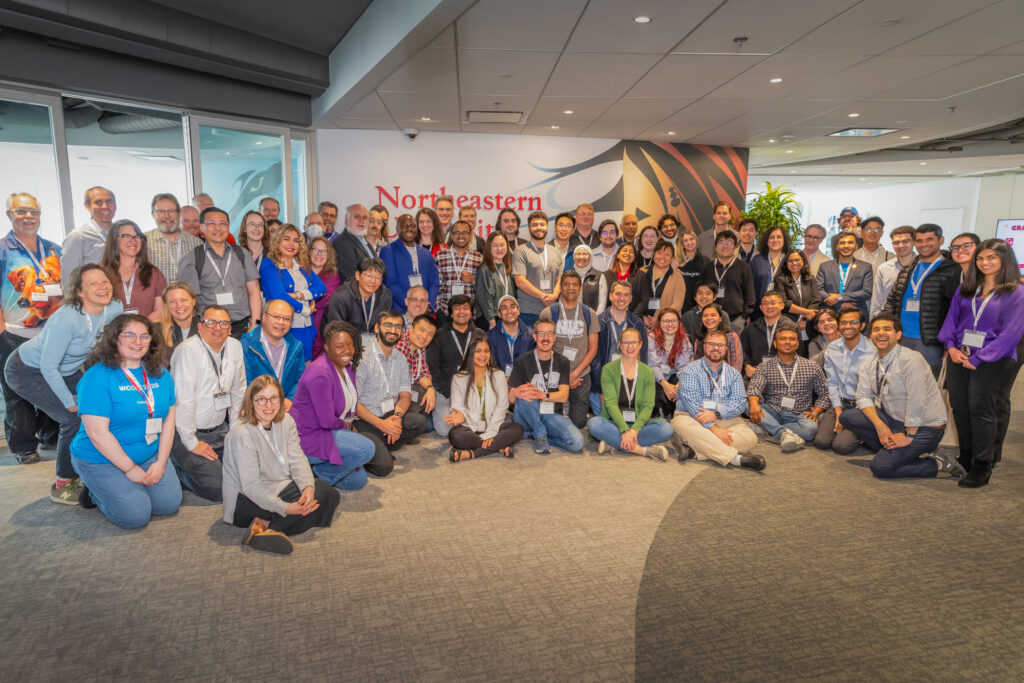
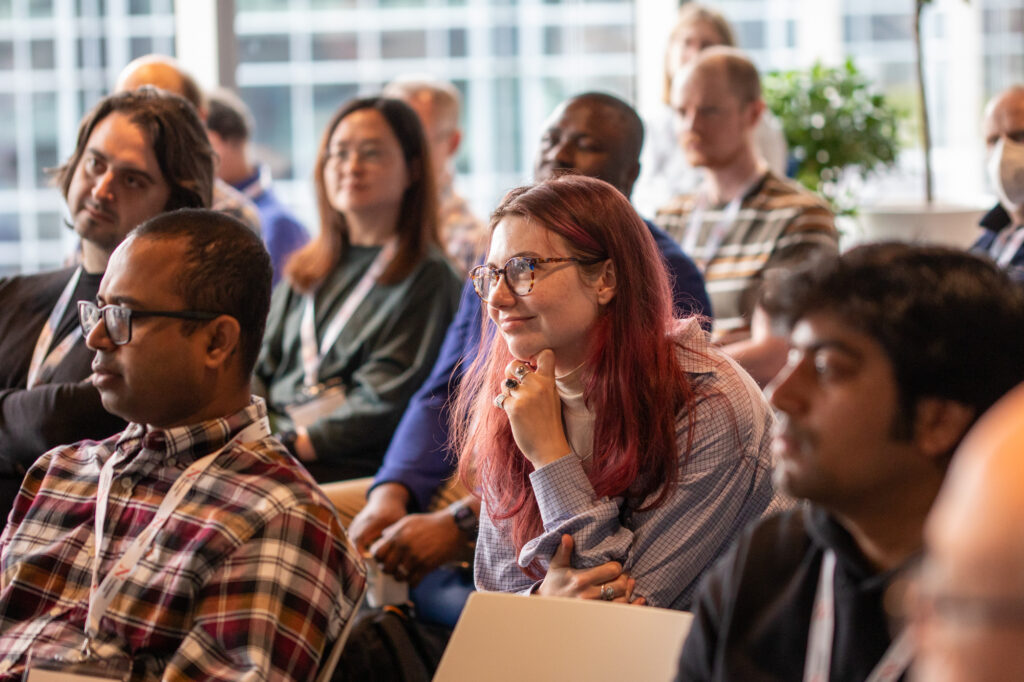
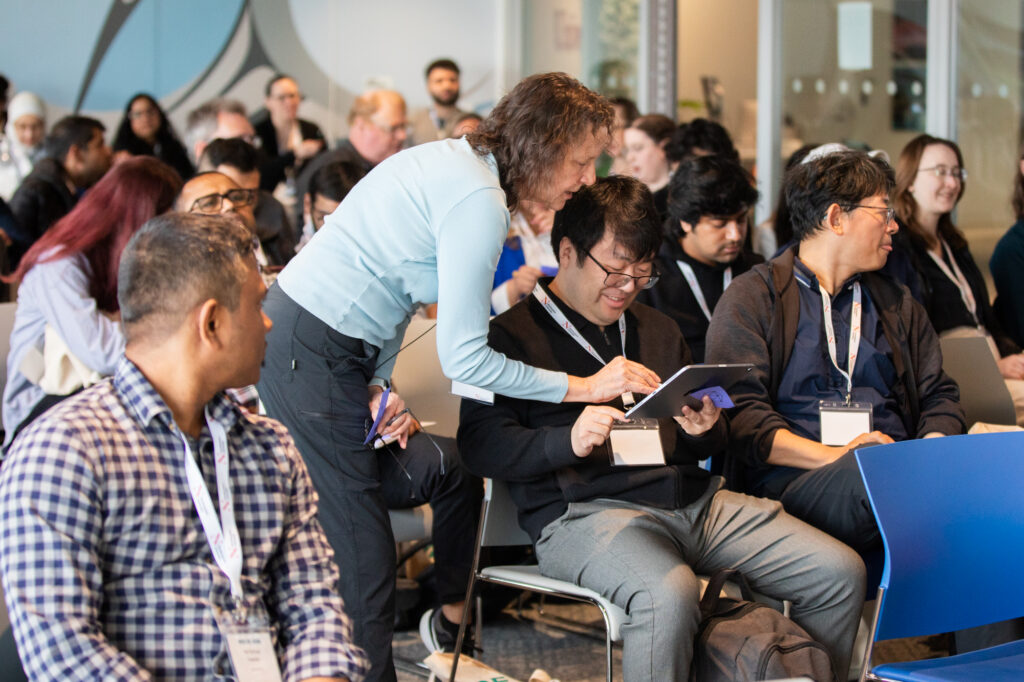
On April 30 and May 1, computer science educators from around the globe gathered at Northeastern’s Vancouver campus for the Western Canadian Conference on Computing Education. It was the first time Northeastern hosted WCCCE, and highlights Northeastern’s full-fledged arrival into Canadian computing education.
WCCCE always takes place in Western Canada, but it includes attendees from locations such as Ontario, California, and even Finland. The conference is open to educators from the K-12 through doctoral levels, though most attendees are university faculty and students.
“The fact that we hosted the conference was not random,” said Ildar Akhmetov, Khoury associate teaching professor and director of computing programs in Vancouver. “It showcases our role in the Western Canadian educational landscape. The conference is mostly hosted by major public universities, and it was quite a challenge to get it hosted at Northeastern. There’s growing recognition of Northeastern Vancouver, not just as a regional campus, but as an important regional player.”
Akhmetov served as the organizational committee co-chair, managing logistics like rooms and catering. Lino Coria Mendoza, Khoury associate teaching professor and director of the global network’s MS in AI program, served on the program committee, reviewing papers and offering feedback. He sees the conference as a way to represent Northeastern’s global reach in Vancouver.
“Some attendees thought Vancouver was our only campus,” Coria Mendoza said. “Northeastern is well known in Boston, but in Canada people have not heard about the quality of our programs enough. It was a really big deal, and attendees were amazed at the quality of the conference. We have been embraced by the Canadian academic community.”
Akhmetov stresses Northeastern’s agile approach to pedagogy, which he thinks adapts more quickly to changes in the tech world than Canadian public universities. He also points outthe campus’s flipped classroom approach, where students — rather than sit in lengthy lectures — watch videos and read book chapters before coming to class, then do activities in class that reinforce their learning.
Once a month, Professor of the Practice Juancho Buchanan leads pedagogical roundtables for the Vancouver and Seattle teaching faculty to discuss which teaching techniques are working and which aren’t. Those discussions increasingly focus on the challenge of using large language models (LLMs) in education. Traditionally, classes would discuss material, then write a piece of code or take a paper exam to assess learning. Now many common assignments can be done with LLMs, and faculty can struggle to provide assignments that challenge students enough to impart the material.
Buchanan presented a different approach in his conference keynote. He assigns large bodies of code to students, then has them implement a new section of code within the larger body. Students read through this code and learn to integrate class concepts into existing code.
“I challenge people to think of LLMs as tools they can use to prepare assignments where students struggle in a new way,” Buchanan said. “When all knowledge is available at the tip of your fingers, how do you get students to synthesize that knowledge?”
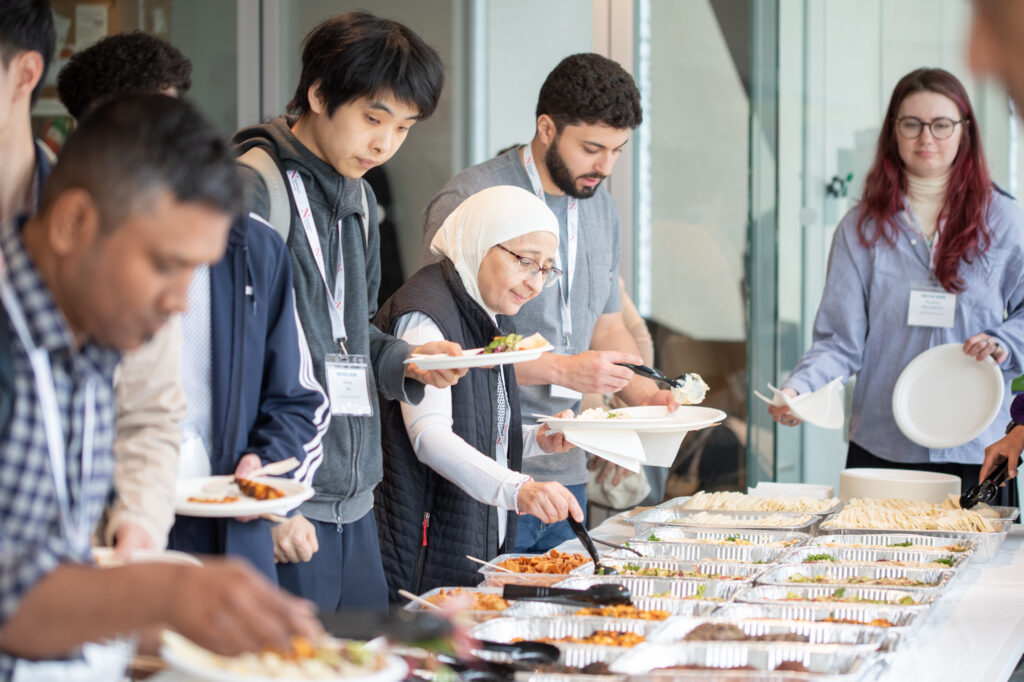
Buchanan notes that Northeastern provides faculty and students with a generous budget to work with Claude. He sees LLMs as a potential game-changer for Khoury College’s Align master’s students with non-CS backgrounds, as these tools can be personal tutors 24/7.
“The major thing we’re demonstrating to Canadian institutions is that there is a path for students who have done well in a previous career and want to switch over into the tech side,” he said. “There’s no other program like in Canada like the Align program.”
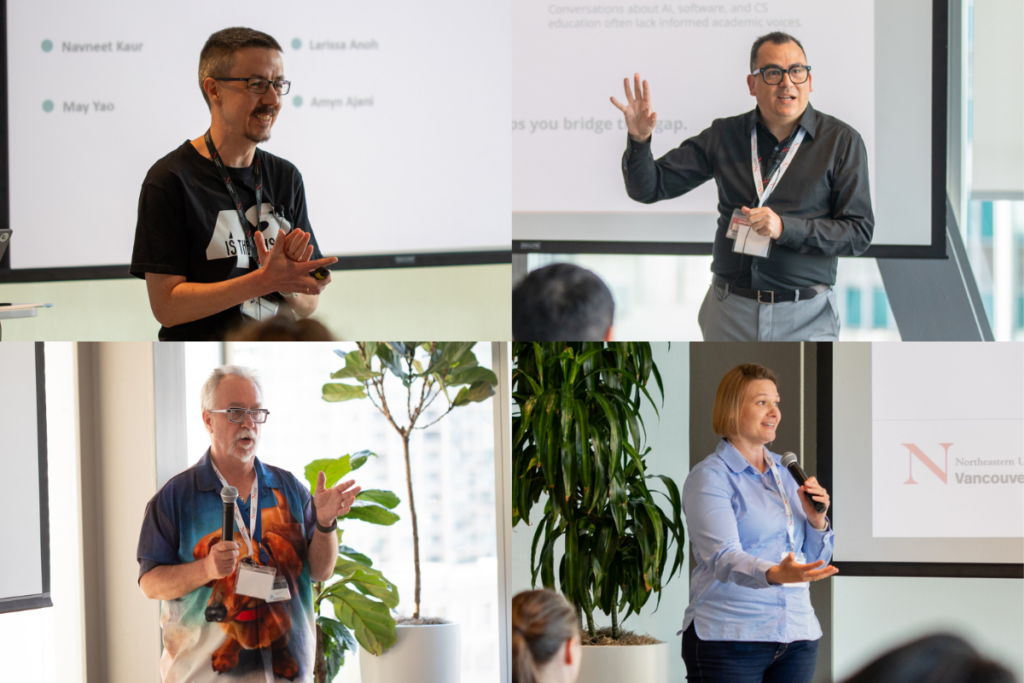
A conference staple is “blizzard talks,” a Canadian version of the lightning talk. This year, Coria Mendoza presented on essential skills, a reframed definition for soft skills like teamwork and communication. He also ran a workshop on how academics can create content for social media.
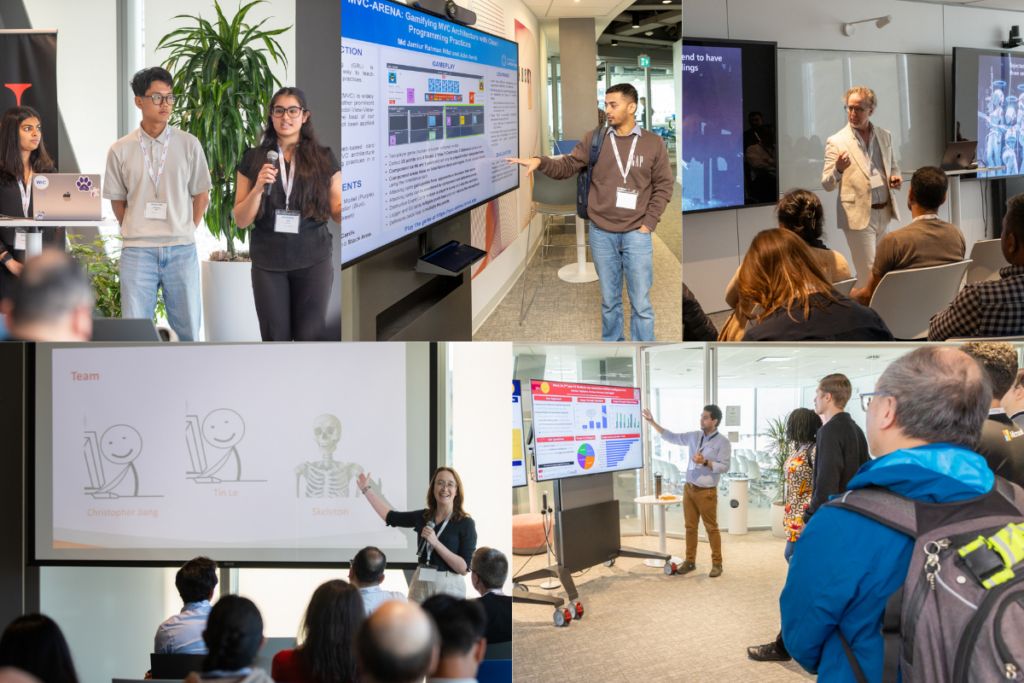
“A lot of people on social media talk about computer science being obsolete or that AI is going to destroy all of us,” Coria Mendoza said. “We professors usually stay away from this conversation, but our voice is really important. We actually know about AI and higher education.”
Coria Mendoza agrees with Buchanan on the need to find new teaching methodologies in the face of LLMs, as well as the importance of applying computer science to interdisciplinary careers in AI.
“Coding is something students have to learn, but what people are learning is to develop computational thinking skills and work on complex products,” Coria Mendoza said. “Our experiential learning is particularly interesting for graduate programs. We end up with some of the best computer scientists because of the Align program. I think that we fit well within what Canada needs and what British Columbia is looking for to be competitive in AI.”