Khoury News
Research that hits home: Alexandra To on how diversity fuels creativity in video game design
In the years since GamerGate, video games have often avoided themes of race and identity. In doing so, Alexandra To argues, they're depriving players not just of enjoyable games, but of horizon-broadening stories.
This story is part three of a six-part Khoury News series called “Research that hits home,” which showcases researchers who come from — or form close partnerships with — the communities they study. Previous installments covered research into queer online communities and user-friendly social media.
In 2014, a female game developer was falsely accused of sleeping with a journalist to get a positive review of her game, and the internet exploded. Within months, there were dozens of victims of the misogynistic online harassment campaign #GamerGate, and diversity in video games had become a hot-button issue that many studios were reluctant to touch. A decade later, the industry is still feeling the effects, with many studios and developers feeling ill-equipped to bring questions of race and identity into their games.
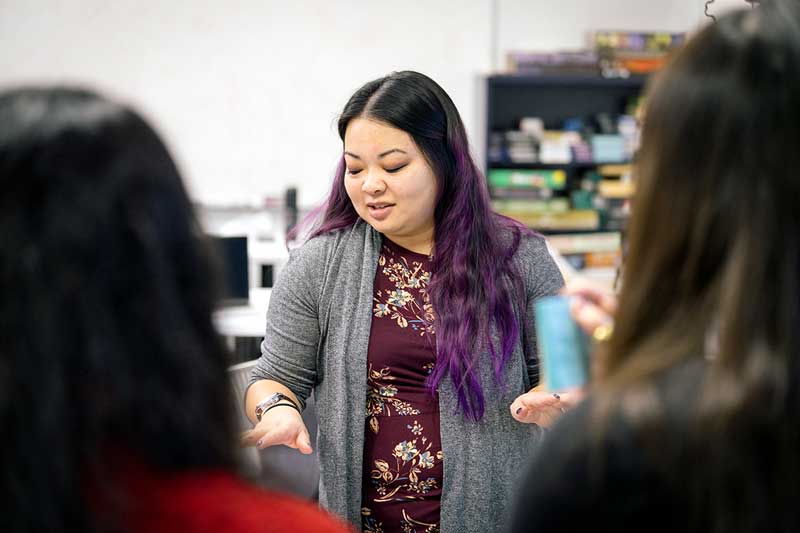
But to Alexandra To — assistant professor at Khoury College and the College of Arts, Media and Design; leader of the multidisciplinary ATo Lab; and passionate games nerd — diversity in gaming is neither radioactive nor an item to check off. When developers and researchers treat racial and cultural differences in an epistemically just way that respects the knowledge and stories of minoritized people, those differences become a chance for creativity in an art form she loves.
“My work is developing a framework around engaging race in games. I ask people to poke at that, to make something new and different that is aware of race and culture,” To said. “Games are just storytelling in a new medium … even the rules and mechanics of a game are things that you can play with and change and think about from a perspective of racial and cultural diversity.”
READ: Timeless games for ageless players: How Bob De Schutter builds games for forgotten audiences
As To has interviewed game developers of color, she’s discovered a range of reasons developers might not engage with identity in their games. Some had proposed ideas but were shut down by larger studios. Others were fearful of being doxxed or harassed the way developers had been during #GamerGate. Still others were happy to make autobiographical games but were wary of including characters with identities like queerness that their team didn’t share.
“That parallels so much of why people are afraid to engage with race — they don’t want to offend someone or do something harmful, which is important,” To said. “But to not put any queer characters in our games ever? That is not the answer.”
To’s research has also uncovered ways that game developers are handling race and culture creatively, going beyond darkening a character’s skin tone to weave different ways of thinking into the stories themselves. For example, a lot of popular media follows the “hero’s journey,” a story template in which a single hero is forced into an adventure, struggles, grows, and returns home to save the day. But a lone hero overcoming adversity far from home is only one type of story that a game can tell.
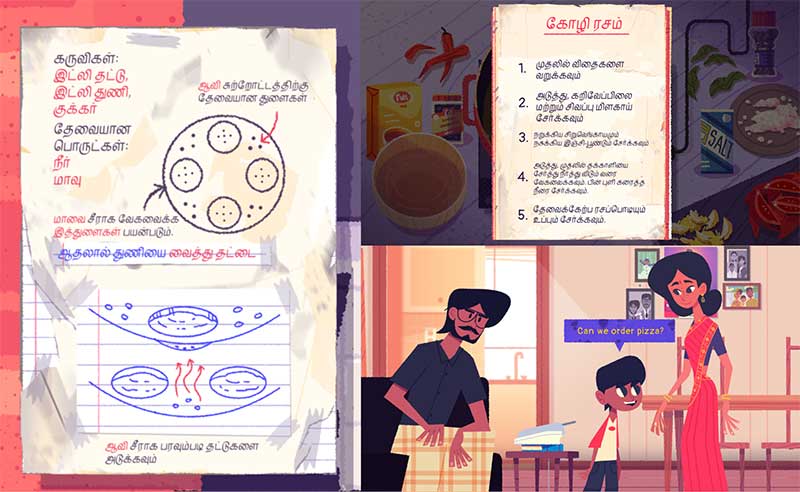
“For example, the cooking game Venba follows this Indian immigrant family in 1980s Canada. The levels involve cooking culturally relevant foods, and there’s fun mechanics around a recipe book that’s torn or water stained, and you’re trying to figure it out,” To said, noting that the game’s story, goals, obstacles, mechanics, and interaction design immerse the player in the immigrant mother’s life, rather than simply slotting a nonwhite person into the hero’s journey. “The main character primarily speaks Tamil, and she has a young son who primarily speaks English. As the viewer, you see all the text in English, but you can tell when her son is speaking in English because some of the words blur or scroll on the screen too quickly. There’s narrative design there in the UI.”
Another of her favorite examples is the puzzle game “Never Alone.” The game was developed in collaboration with the indigenous Alaskan Iñupiat people from a traditional story and is spoken entirely in the Iñupiaq language.
“It’s engaging in cultural preservation for a language that was dying, and that game is incredibly popular globally; the subtitles have been translated into at least a dozen languages,” To said. “There’s this sliding scale of race and culture in gaming, from simple representations that can be extremely meaningful to people to this really deep, culturally rich storytelling.”
Both in her interview studies and in her work as a PhD advisor, To has learned to engage productively and respectfully with lived experiences that differ from her own, as she hopes to help game developers do. Her best advice is to become someone who people are comfortable correcting, as it opens the door for trusting collaborations, meaningful insights, and beautiful products.
“You have to show that you’re going to engage thoughtfully and carefully, that you’re not going to punish people for pushing back,” she said. “My students and I disagree, debate, and sharpen each other’s ideas all the time, and that’s a great thing … Calling up all these different elements of your identity and putting that into your art is just a joyful experience.”
Looking forward, To is excited to share more tools for engaging with race in gaming and to get feedback about her frameworks’ applicability in the industry. She also wants to get back to her roots and design more games herself; she’s currently working on the early stages of a tabletop role-playing game about transmuting grief, dread, and fear into rage. The game is deeply informed by her and her collaborators’ experiences as racialized and queer people in the United States, and it typifies the ways that centering epistemic justice can shape stories in exciting and new ways.
“True diversity is getting to engage with many kinds of characters, stories and people, both like yourself and unlike yourself. It’s good to engage in empathy and perspective sharing, and to learn about other values and cultures and experiences,” To said. “I love that about games — we’re not just passively consuming, but actively co-creating as we engage with the media.”
The Khoury Network: Be in the know
Subscribe now to our monthly newsletter for the latest stories and achievements of our students and faculty